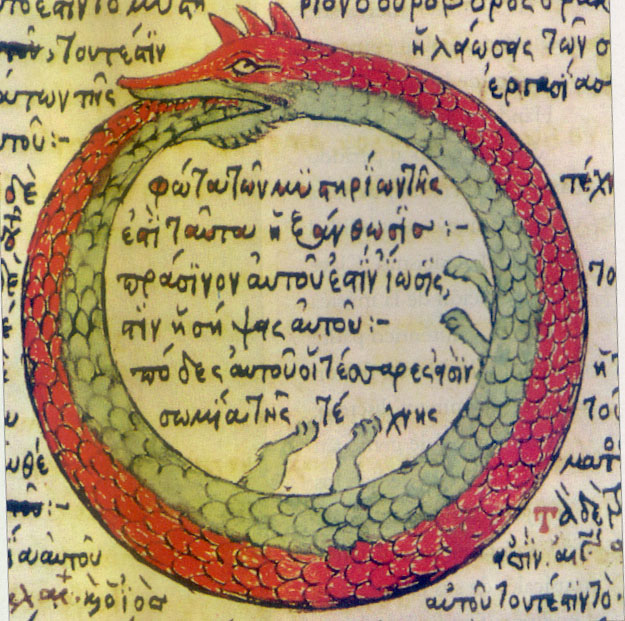
Self-consistency principle
Time-travel Paradoxes
Time travel raises fundamental questions about causality, particularly when an event in the future influences its own past [2]. Classical examples, such as the grandfather paradox [3], illustrate how circular causal relationships might lead to logical contradictions. However, such paradoxes do not necessarily imply that all forms of time travel are impossible. A self-consistent causal loop may avoid contradictions if every event remains compatible with the entire history.
Closed Time-like Curves
Closed timelike curves are theoretical structures in general relativity that allow an object to follow a path through spacetime and return to its own past [4]. They provide a mathematical framework for investigating causal loops within a single spacetime. The Novikov self-consistency principle suggests that events along such curves must satisfy global consistency constraints [5]. This raises the possibility that circular causality may be logically consistent under certain physical conditions.
Circular Universe as a Whole
Causal Closure
Can the principle of self-consistency be extended from individual events to the universe as a whole? A causally closed universe might exist without requiring an external first cause, provided that its causal relationships collectively form a self-consistent structure. In this picture, the origin of the universe could be explained through causal processes that are themselves part of the universe's history. Within such a closed causal loop, each event has a cause, but the causal chain has no first event.
Cosmological Natural Selection
Lee Smolin's cosmological natural selection hypothesis proposes that universes may reproduce through black holes [6]. Across generations, the physical parameters such as interaction strengths may slightly vary. A further hypothesis is that, in some offspring universes, both how time is defined and how it flows could differ from our current understanding.
Spawning a Parent Universe
A causal loop could also connect multiple universes, with a descendant universe eventually giving rise to one of its own causal ancestors [7]. This would require a physical mechanism linking universe creation back to an earlier part of the causal structure, potentially through unconventional spacetime geometries or temporal relationships. This would allow a universe to participate in its own causal origin.
Role of Humanity
Developing a Set of Falsifiable Hypotheses
Now, the primary goal is to transform circular causality from a philosophical conjecture into a collection of scientifically testable hypotheses. This involves building on existing theoretical approaches to construct explicit physical models and examine whether they satisfy mathematical consistency and stability conditions. Beyond theoretical consistency, the goal should be to derive falsifiable predictions [8] that could distinguish circular cosmological structures from alternative models. Each result, whether supporting or challenging a particular mechanism, would contribute to a systematic understanding of circular causality.
Engineering Time and Universe Creation to Close the Loop
Furthermore, humanity (including what humanity has built) might eventually acquire the ability to manipulate spacetime and create new universes. One hypothesis is that cosmological evolution selected our universe's physical parameters to support intelligent life and technologies capable of producing offspring universes [9]. This raises a possibility: humanity may not merely discover the causal structure of the universe but eventually play a role in completing it, unless the laws of physics rule it out.
References
- Ouroboros (Wikipedia).
- Time travel (Wikipedia).
- Temporal paradox (grandfather paradox; Wikipedia).
- Closed timelike curve (Wikipedia).
- Novikov self-consistency principle (Wikipedia).
- Cosmological natural selection (Wikipedia).
- J. Richard Gott III and Li-Xin Li, "Can the Universe Create Itself?" (1998).
- Falsifiability (Wikipedia).
- Jeff Shainline, "Does Cosmological Evolution Select for Technology?" (2020).